
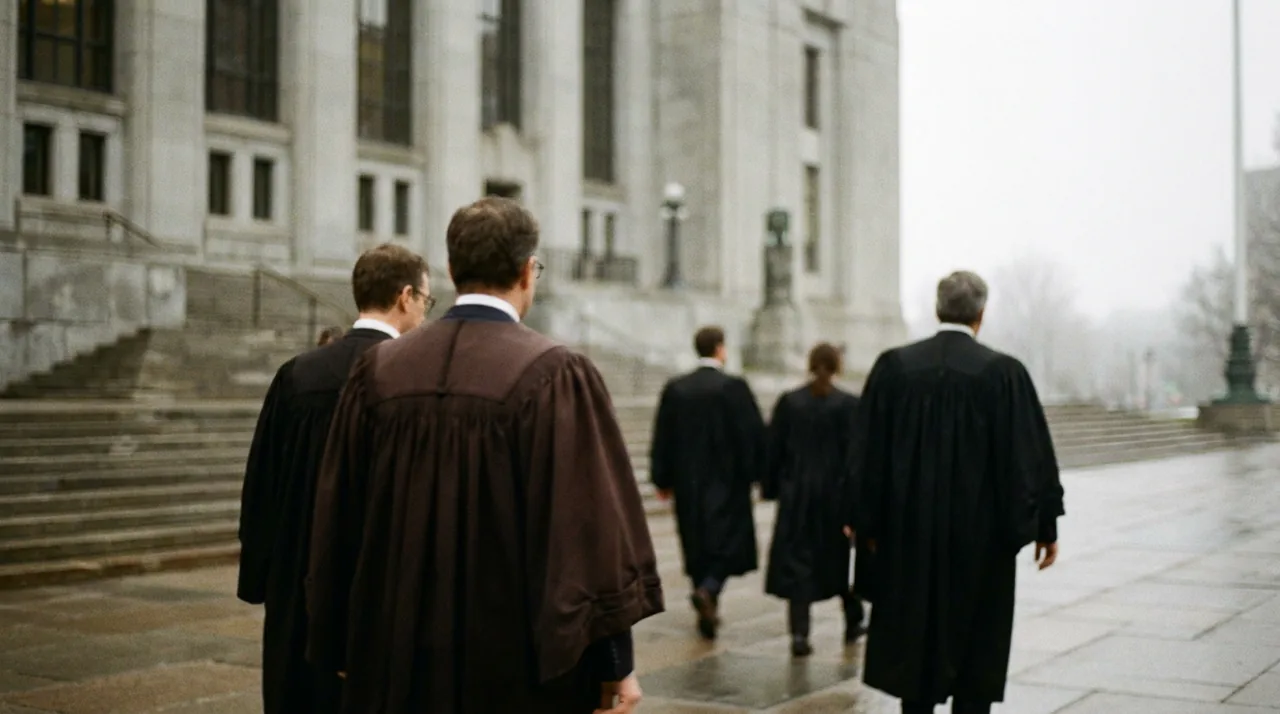
The Supreme Court of Canada largely upheld Quebec's Bill 21 on 27 November 2026, but exempted elected members of the National Assembly from the religious symbols ban.
Quebec passed Bill 21 in June 2019, saying it would protect the religious neutrality of public institutions.
Lower courts in Quebec upheld the law in 2021 and 2024 because of the notwithstanding clause.
Quebec renewed the notwithstanding clause for Bill 21 in 2024.
The Supreme Court of Canada dismissed the appeals against Bill 21 and Quebec's cross-appeal.
Bill 21 survived by a single vote, with three of the seven judges saying they would have struck down its core provisions.
The decision leaves teachers, judges and police officers in Quebec barred from wearing religious symbols on the job.
Richard Wagner
Chief Justice Richard Wagner, writing for three justices, said Quebec had validly used its power to keep Bill 21 in force.
Wagner wrote that the notwithstanding clause imposes only formal requirements on legislatures.
He said Bill 21 was rooted in Quebec's legitimate and historical commitment to keeping the state secular.
Andromache Karakatsanis and Michelle O'Bonsawin
Justices Andromache Karakatsanis and Michelle O'Bonsawin wrote in a partial dissent that Bill 21 violates the right to freedom of religion.
They wrote that the court should not be silent when claimants ask it to acknowledge that the Act infringes their rights.
They wrote that the effects of Bill 21 fall most heavily on Muslim women.
Details
The Supreme Court of Canada found that requiring elected members of Quebec's National Assembly to uncover their faces infringes their democratic rights.
Four of the seven Supreme Court justices agreed that judges can formally declare a law violates Charter rights even if the notwithstanding clause keeps it in effect.
The Supreme Court of Canada declined to impose new limits on the Constitution's notwithstanding clause.
The Supreme Court of Canada said politicians can use the notwithstanding clause without waiting for a court to rule on whether a law violates Charter rights.
Bill 21 bars some public sector workers, including teachers and police officers, from wearing religious symbols on the job.
Timeline
- Quebec passed Bill 21.
- A Quebec Superior Court judge ruled that Bill 21 violates the basic rights of religious minorities but is permissible under the notwithstanding clause.
- The Quebec Court of Appeal upheld most of the Superior Court's ruling and overturned an exemption for English school boards.
- Quebec renewed the notwithstanding clause for Bill 21.
- The Supreme Court of Canada agreed to hear appeals against Bill 21.
- Seven judges of the Supreme Court of Canada heard the Bill 21 appeal over four days.
- The Supreme Court of Canada released its ruling on Bill 21.


No comments yet
Be the first reader to respond to this story.